-
Tongue Eater by John Bierce (2022)


At the time of writing this review it is about 18 hours until the last book in the Mage Errant series, The Last Echo of the Lord of Bells, is available to read and I’m slowly going crazy. I’ve reread the whole series, made copious notes on every small thing to try and work out what’s going to happen, and woke up from dreams about it with new theories on my lips. I am obsessed.
And a lot of that is because of Tongue Eater.
John Bierce tends to write in tides. There’s a lot of build up before the water rises, the waves come crashing down and the action begins. It was evident in A Traitor in Skyhold and was very evident in A Siege of Skyhold and that’s basically what is happening here. The Last Echo of the Lord of Bells is going to be a big, climactic finish and this is the build-up.
Which, unfortunately, leaves this book in an odd position.
It’s usual for books to end on cliffhangers or to hint at what might happen in a sequel. But usually they have some kind of conclusion and this book just kind of ends. It’s the training arc, the preparations, the subtle manoeuvring and I’m sure they’re going to pay off explosively in the finale but I have been left on the edge of my seat for over a year, waiting to find out what happens. So it’s a little hard to recommend this book for its own merits, as a lot of it will rely on a different book.
Don’t get me wrong, it’s still a fun read. Bierce’s world building has expanded even more, which is something I always liked about it. Except for one specific instance (the return of Imperial Ithos) all the drama, war and conflict has been kept to one continent and it only affects this one continent. And it’s not even the biggest continent out there. These are not world threatening events and that serves to add a nice perspective to everything.
But this book pushes back those boundaries a bit, showing us more of what’s out there and I very much enjoyed it. Hugh and his friends are still as enjoyable to read as ever, the magic is still interesting and the writing is the usual mix between fun and jokey while being serious when necessary. This is still a good book that I would recommend to read.
But mostly I just want to get my hands on The Last Echo of the Lord of Bells.
(Seriously, I have so many theories you guys! My entire collection of books is annotated with guesses, connections, and manic laughter!)
Oh, and we’ve got another one of his short stories set in the same world at the end. This one is about Gram, one of Talia’s brothers, and was, as usual, a great read.
-
The Siege of Skyhold by John Bierce (2021)

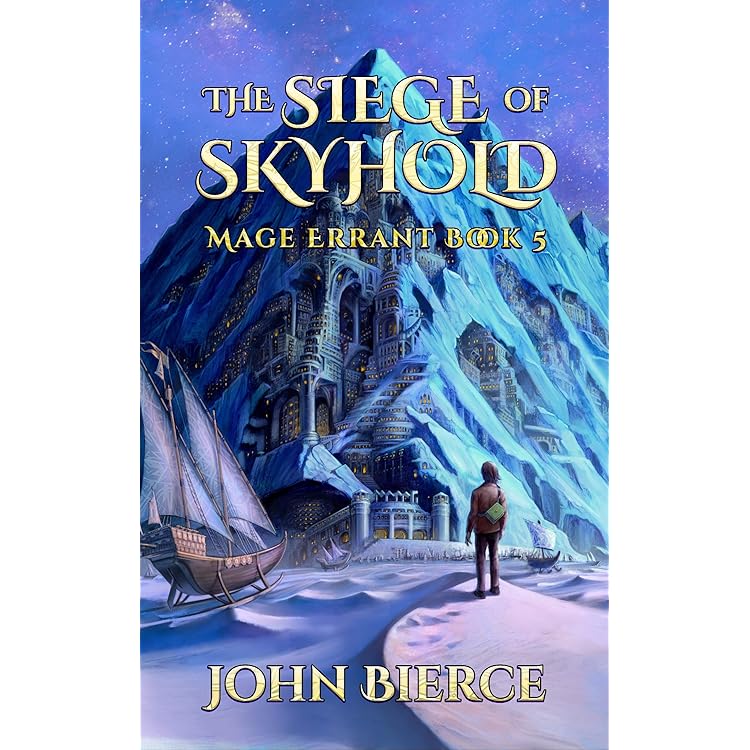
I really really like siege stories. The cat and mouse games, the attempts by both sides to break the moral of the others, finding interesting solutions to all the problems that come up and the growing desperation on both sides. They’re compelling, always interesting and every author puts their own spin on it.
But honestly this isn’t much of a siege story. I mean they’re under siege and not leaving Skyhold but it is a mountain carved into a city so they weren’t leaving much anyway. There are attempts to break in but the story is focused on Hugh and his friends, who are still students despite all their power, and as such don’t have much to do with any active defence of Skyhold itself. They’re able to witness and hear about stuff happening but, with one or two exceptions, they aren’t able to actually affect anything. They spend large amounts of the book preparing, practising and trying to get ready for the worst.
Honestly, if I had to compare it to anything, it’s a little like lockdown was. There’s a large, nebulous threat they can’t do anything about, the news is all pretty grim but also distant in a weird way and they’re cooped up and the stress is slowly getting to them. Which is an interesting perspective but not what I usually look for.
What there is, though, is a huge dramatic battle.
One of the strengths of John Bierce’s magic system is it’s sheer versatility. There are a lot of different affinities that the different mages can have and they all use them in different ways. In fact it’s a point that’s been made time and again that those that become Great Powers are those who don’t just follow a usual path but carve one out for themselves, becoming unique.
So a battle of said Great Powers is something to see.
I’m not going to spoil anything but the battle itself takes up the last 35% of the novel and it’s great. It’s a lot of fun seeing a bunch of different approaches and philosophies slug it out, with interesting tactics and dramatic moments. The whole book builds up to this and it’s worth it.
For the rest of the book there’s the usual things you’ve come to expect with Bierce’s writing. We’ve got new and interesting characters (and I think we’ve got some autistic and ADHD rep here!), great world building and fun, enjoyable writing. The book is great and ends fantastically. I don’t think I can praise it more.
-
The Lost City of Ithos by John Bierce (2020)

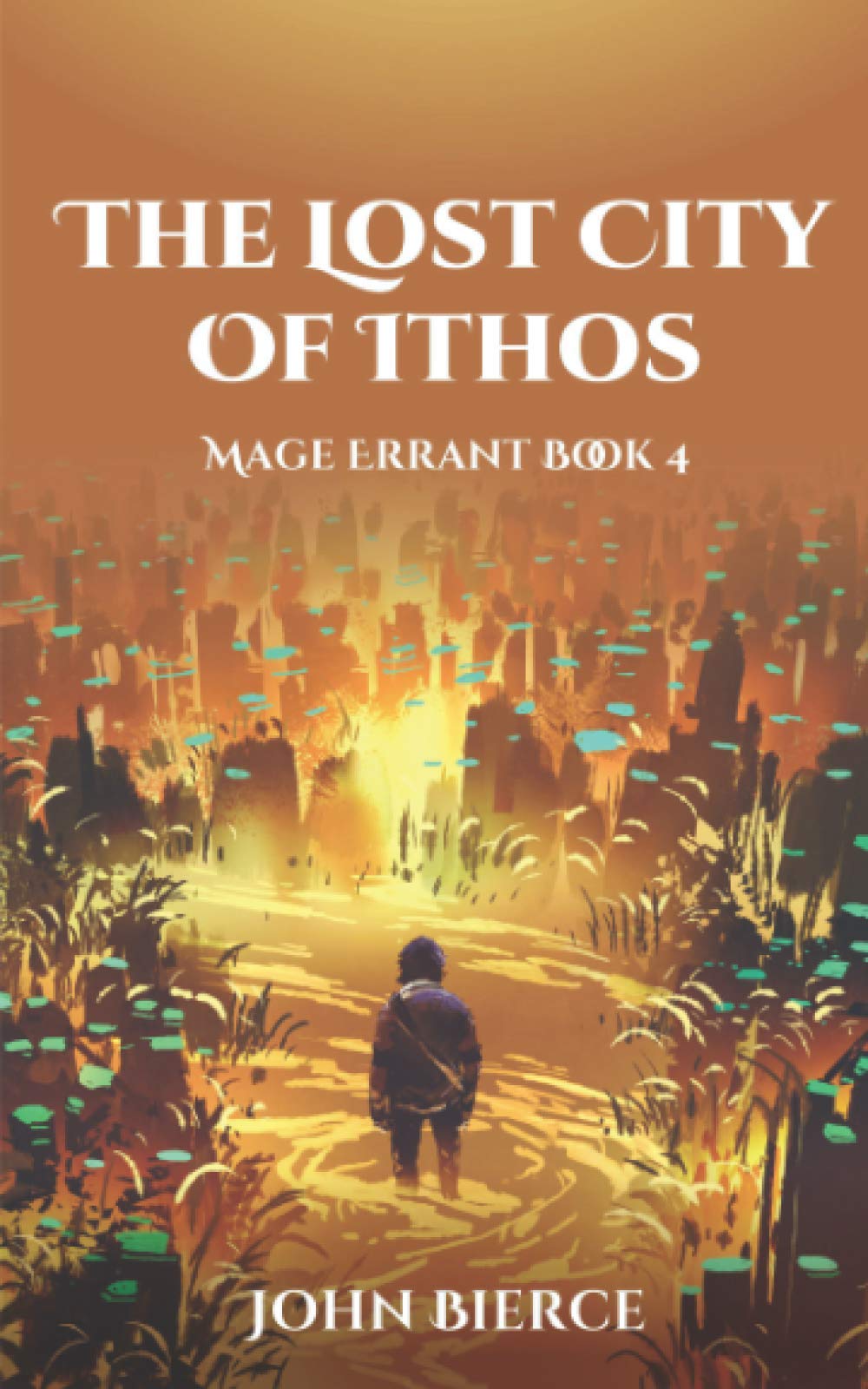
As an author grows you can see a big change in their writing. It usually gets a lot loose, more fluid, more comfortable. It can get a bit more irrelevant and personalised and is the start of an author really gaining their voice.
This is that book for John Bierce, I think, and I love it.
There’s so much fun to this book. Hugh and the gang are searching for the ancient, ruined capital of a defeated empire that will be making a reappearance at some point and fighting against the agents of a different, expansionist empire while they’re at it. It’s as traditional an adventure novel as you can get and it revels in that fact. Taking us from fascinating location to awe-inspiring vistas, through exciting action and trickery it’s a great journey that the characters are on and you’re more than willing to join them for it.
The world building is, by this point, just fantastic. I mentioned in my review of Into the Labyrinth how much of the foundation was laid in that book through the Bestiary and it’s starting to pay off here. References to creatures that were mentioned back then make the world feel so much more alive and when one of them turned up, in a minor capacity, I got so excited! This is a series where I just scoured the pages of all the books, highlighting everything that looked interesting or might turn up later. Not because I had to but because I wasn’t to explore this world as much as I could. My favourite Great Power in the series, The Mage Eater, also shows up here. Once you’ve read about them you’ll know why they’re my favourite.
Oh, and while we’re talking about worldbuilding, the end of this book contains a version of Galvachren’s Guide to Anastis. It seems identical to the first one but some of the things that have previously been redacted are now readable. Not a big deal but I thought I’d mention it.
Also, by the end of this book I’m fairly sure we have representatives of all of the LGBTQA spectrum appearing, some with cool backstories and some just living their lives. It’s nice to see and I’ve always felt that it’s a credit to the flexibility of worldbuilding and (specifically in the case of trans people) the magic system that it allows and welcomes them.
The moment-to-moment writing has also gotten better and, as I mentioned above, a lot more fluid. Whether it’s the ship’s (spider)cat called Precious who likes to wear knitted cats ears or the continuing mischief of Hugh’s spellbook there’s a lot of funny moments that sneak in here and there. It’s a fun and bouncy read that keeps dragging you along and making you want to read the next page.
Not that it’s all just jokes. There’s serious moments as well, that are played really well. And the characters are growing closer, which is really nice to see. Not just the main group, who were already pretty close by this point, but Hugh, Sabae and Talia with Godrick and, especially between Hugh and Kanderon. I really like that last relationship, it’s very soft and sweet.
This might honestly be my favourite book in the whole series, for the worldbuilding, for the development of the characters and because it’s just fun to read through. It also includes a short story about Ilinia Kaen Das at the end and I love that character and this short story. So all in all, this is a great book.
-
A Traitor in Skyhold by John Bierce (2019)

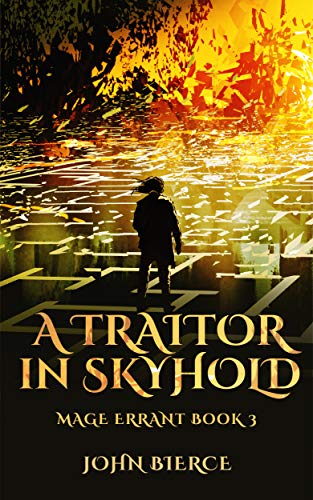
Honestly, these books just keep getting better.
A Traitor in Skyhold marks a big expansion in the scope of the series. While before a lot of the world beyond the books was hinted at, now they start having an effect. The first book was all about Skyhold and the second was all about Teras Tel but in this one, while it is once again set solely in Skyhold, the effect of other nations and interests are both seen and felt. Whether it’s the arrival of one of Sabae’s family members, offhand introductions to different ambassadors or just people leaving and coming back we’re really starting to feel in the middle of a living world. The worldbuilding was great in the first book, with great and powerful creatures mentioned in Galvachren’s Bestiary but here there’s references to meeting some of them and that all builds upon the framework already laid out.
The story is great as well, of course. As the title suggests there’s a traitor in Skyhold and it’s up to our favourite foursome, Hugh, Talia, Sabae and Godrick, to work out who it is. Or at least try to.
If there’s one complaint that some other people may level at these books it’s that John Bierce really likes building things up. The main characters develop a lot in this book, both personally and in their capabilities. It’s also, you know, a school so there’s a lot of lessons in various things. Personally I adore all of this but I know that some other people might feel differently.
Even if you don’t like the occasional slow pace, the ending makes up for it. It all comes to a fantastic finish, where we can really see what our heroes are now capable of. There’s a lot of action and it’s described well. And then the next book, and in a lot of ways the rest of the series, is nicely set up.
While not my favourite of the series, A Traitor in Skyhold is a lot of fun to read and even more fun to pour over. I love it and it leads into the one that really might be my favourite.
-
Jewel of the Endless Erg by John Bierce (2019)


Jewel of the Endless Erg picks up right where Into the Labyrinth left off and in a lot of ways it’s a very different book. Into the Labyrinth was the set-up book, where the rules of the magic system were explained and the characters for the rest of the series were introduced. There was also a lot of world building, though a lot of it was quite subtle. There was action introduced at the end but it wasn’t necessarily action we were anticipating.
Jewel of the Endless Erg, however, is just a traditional action adventure and I love it.
Not that it’s just endless action. The main character, Hugh, Sabae, Talia and Godrick, are all students and still learning. They’re tougher and more capable than they were in the last book but that’s not really saying much. And although they’re on a break from Skyhold the lessons never really end.
The worldbuilding I loved in the last book are back in spades. Anastis really is a fantastically deep world. Thought has been put into everything, from the ecosystems to the economy, to how the magic works, to how a world where people can become Great Powers would actually work. And it’s all explained in such a light and breezy manner, where you can engage with it if you want to (and the vast amount of sections I’ve been highlighting show that I do) but can just skim over it if you don’t want to. The characters learn, we learn and I really enjoy everything we’re learning.
Also, and this might sound weird, but in this book they’re taught by Alustin not to use tools they haven’t tested in a battle scenario and I just love that. It gives so much more importance to the constant practising and working they’re doing, to the point where I’ve started noticing people in other books doing that and it’s got unsatisfying to me.
But it’s not just learning in this book. As I said, it’s an action adventure. The main characters are on a journey, literally sailing from set piece to set piece and it’s a lot of fun to read. The fight scenes are fun and quick, without letting you get too bogged down. The intrigue is intriguing and Hugh and the gang react in entertaining and believable ways.
Finally, I just want to give a mention to both the writing and the overall plotting. The writing is light and readable and there’s a humour that pervades it all. I particularly love the way that this book begins, with the line ‘Hugh of Emblin was good at quite a few things, but he wasn’t particularly good at running on sand.’ It’s a wonderful way of connecting it to Into the Labyrinth, which beings with ‘Hugh of Emblin wasn’t good at much, but he was very very good at hiding.’ It’s also a really nice, quick way of showing how the character has grown.
And with regards to the plotting, the sheer restraint that Bierce shows is great. There’s hints to things that won’t come up for another two or three books and I love stumbling across them like hidden gems. It’s such a masterful way of hinting just enough that it’s very satisfying whenever whatever is being referenced is revealed.
John Bierce is selling both Into the Labyrinth and Jewel of the Endless Erg in a bundle on his Amazon page and I can understand why. I loved Into the Labyrinth, even more on my last read through, but because of it’s slow pace it might not be everyone’s cup of tea. Anyone who thinks that though should read Jewel of the Endless Erg. With the both of them together you can really see what John Bierce can do.
-
Into the Labyrinth by John Bierce (2018)


I freaking love this series. I read through all of them in 2021 and then sent everyone the first few books for Christmas that year. The finale is coming in just over a weak so I’m reading back through to prepare myself. The strength of the Mage Errant series lies in the world building. The continent of Ithos is huge and varied, with many wonderful creatures, locations and magics scattered around it. It’s got a depth and you can see that even in this first book. My favourite thing by far in the whole novel is a book called Galvachren’s Bestiary, which names and gives descriptions of numerous powerful creatures on the continent. And some of those mentioned will appear or be referenced in subsequent books. My kindle copy of this book is covered in highlighted sections where I note down if/when they turn up again or if we ever hear anything else about them. One of the creatures that was referred to offhand in this book appeared for like a single scene in the fourth book and I was so incredibly excited to see it. But I don’t know what’s cooler, the ones that do turn up again in some way or the ones that don’t. Because for something like that to be referenced and then just not seen again adds depth to this world and I love that.Into the Labyrinth is very much a set up book. It’s not all that long and, on paper, not all that much happens. But it sets up the world and things that will pay off in future books, plot wise and character wise, as well as explaining how the magic system works. Although this will be expanded upon later (in ways that really enhance it and make it one of my favourite systems) it gives you a good basis to enjoy the rest of the series.And yet, having said all that, I was pleasantly surprised as to how well this book holds up. The first book an author publishes is usually a lot weaker than the ones that come later, just because you learn a lot through writing that first book and a set up book usually loses rereadability as you already know a lot of what you’re being taught. But it’s really well constructed. There were things about the plot of this one book that I only noticed on this, my third or fourth read through, and there’s a level of subtilty here that was a joy to read. It’s short but it gives you everything that you need.And then after this the series explodes.
-
The Wrack by John Bierce (2020)

I’m not sure if ‘contains plague and pandemic’ should be a trigger warning these days. I was reading a short story from an anthology a while ago that was about a pandemic sweeping unchecked across the world and how people’s response to it was too slow and too lax and frankly it did not make be feel good. I didn’t get the same feeling here but, considering the traumatic times we’ve all lived through, if you don’t want to read about a plague then I don’t bother you.
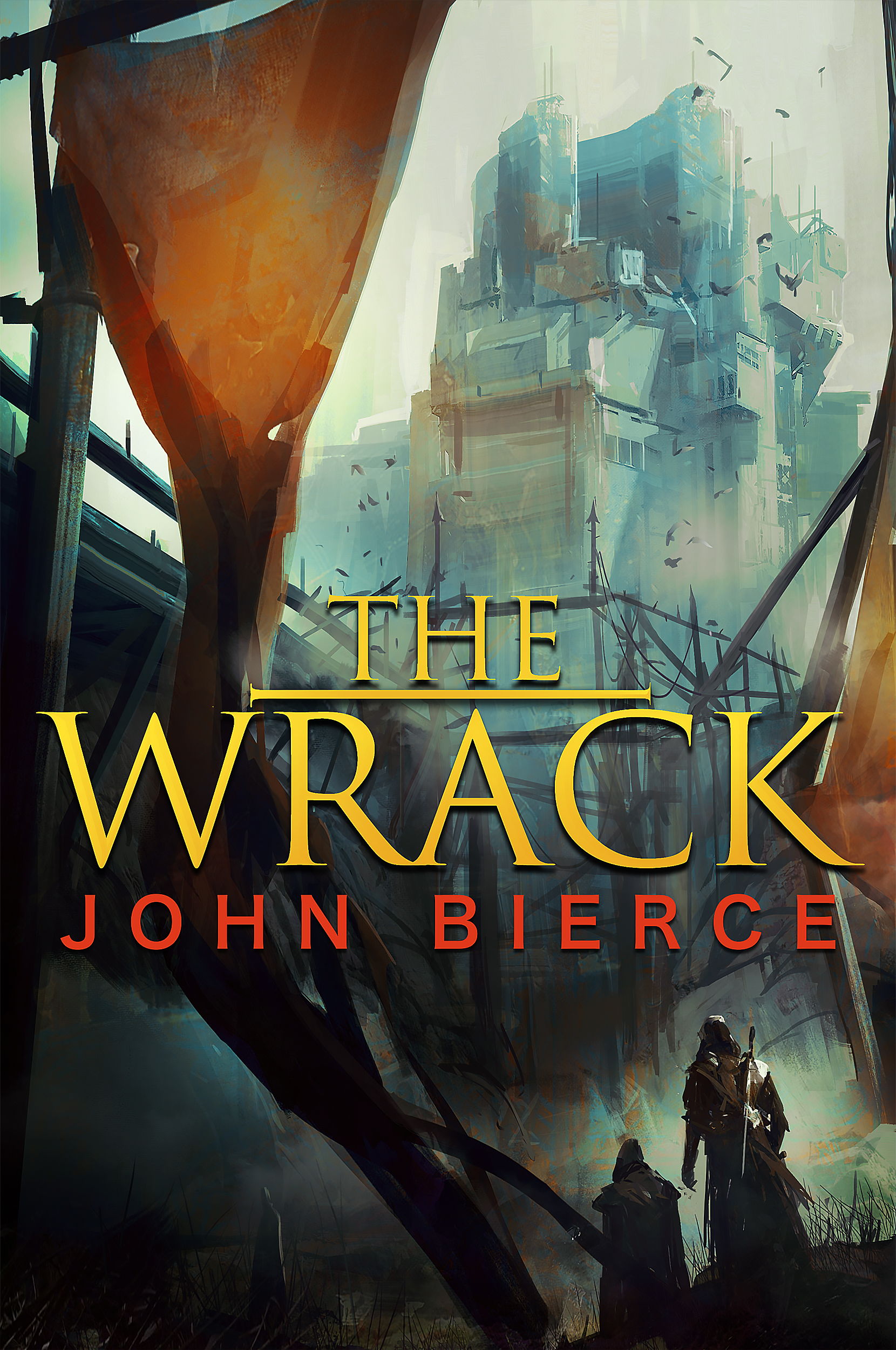
But it is a shame I have to say this about The Wrack. It’s a fantastic little book that was started in 2019 and had the great misfortune to come out in April 2020. In it we see the course of a plague in a fantasy world, from the first few cases to how it spiralled out of control and spread, changing the shape and cultures of countries and civilisations. It’s told through a series of short stories, leading and incredible breadth to the book. I’m always a sucker for big stories told through a bunch of little ones so this was right up my ally.
Like all of John Bierce’s books, it has both pretty intricate plotting and great world building. Reading back through I was delighted to see that hints of the transmission method had been scattered throughout, though in such a subtle way that there was no chance of you seeing them the first go through. The different cultures of the world also come alive. Prior to this I didn’t think I’d get emotional about writing down names but here there are at least two chapters that did it for me.
Like the Mage Errant series this is tied into a bigger multiverse but in a nice and restrained way. You don’t have to read any of the other books that he’s written, and The Wrack works excellently as a stand-alone book.
In the end I’m left feeling a bit sorry for Bierce. It takes a lot of guts to do something as drastically different from his normal series as this was and he pulls it off wonderfully. I really hope that the real-world events that echo this didn’t impact either the sales, the reception or his chances to try something like this again.
-
A Thousand Li: The first step by Tao Wong (2019)


It’s odd to think of a Cultivation novel as a slice of life story but that’s the best way I can think of to describe A Thousand Li. Not that it doesn’t have action and adventure, it is a cultivation novel which means there’s martial arts and combat galore. But it’s probably as close as we can get to a book about the average life of an average cultivator.
Long Wu Ying doesn’t have some grand destiny or dramatic call to adventure. He lives a life as a farmer and is content with that. But after he gets drafted into the army and gets injured in an inconsequential scuffle he gets invited to join the Verdant Green Waters Sect, the premier sect in the state.
As I said, this is a slice of life cultivator novel and Wu Ling doesn’t particularly have any goal beyond generally advancing. I find these types of novels very relaxing. There’s something very chill about watching someone figuring out schedules, trying different martial arts and different cultivation techniques and generally trying to work out what to do next. Maybe it’s because I’m in my late 20s but I find it very relatable. It’s nice to just sit back and read about someone else flail about trying to figure things out for a change.
It helps that the book is really well written and the description is gorgeous. It’s fun wandering through the world alongside Wu Ying. And the book has footnotes! Which is always a plus. They explain what certain things are, for example various weapons, along with a few comments by the author. They don’t always appear the first time one of these things are mentioned but that’s a minor quibble.
In short, A Thousand Li – The First Step is a wonderful way to dip your toe into a new world and a fantastic introduction to the Cultivation genre.
-
Titan Hoppers by Rob J Hayes (2022)


Titan Hoppers gives me one of the main things I look for in books, an interesting concept written well. All of humanity seems to be gathered on a fleet of spaceships for reasons that I presume have been forgotten to time. They were doomed to float through space, slowly breaking down and running out of resources, until they came upon a Titan. A giant space station filled with monsters but also full of food, water and everything else that humanity needs to survive. It also granted certain people access to special powers, which allowed them to investigate deeper into the titan. It was a perilous existence but humanity managed to keep themselves stable.
Then it blew up and the fleet were once again alone in space.
It’s a fantastic set up for a novel, starting off with stakes high and a great understanding of what the problems are. So when a second Titan is spotted you know that it’s desperately needed.
I liked the journey of the main character. Although his sister and mother were Hoppers he doesn’t have the ability, despite desperately wanting it. Being treated like a second class citizen by the Hoppers his own age and how he reacts to gaining his own, unexpected powers was nice. He wasn’t the most interesting character for me, that was one of the side characters, but his story arc was well constructed and helped to introduce the reader nicely to the world.
The magic system is nice as well. It’s a little basic but it’s flexible and not too complicated. But what I really liked was the writing. Hayes really manages to sell the idea that the characters have lived all their lives on space ships and have no other frame of reference. I particularly liked the bit where the ground was described as ‘riddled with hard wires of wood that criss-crossed through the dirt.’ That’s just some great writing right there.
There were a few things that I thought could have been tackled a bit better. There’s an appearance of other Hoppers that I thought should have been investigated before it came to the head that it did but I’m fairly sure it was just setting up for the next book, so it’s understandable. All in all though it was a very fun and enjoyable read.
-
Mark of the Fool 2 by J. M. Clarke (2023)

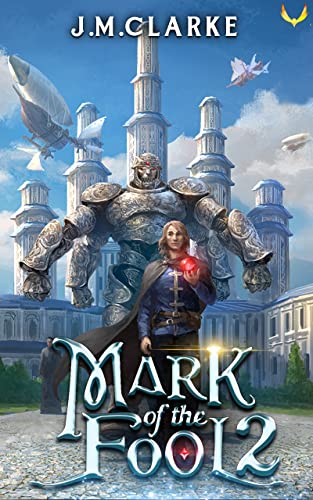
Mark of the Fool 2 picks up right where the first left off, with Alex’s sister Selina depressed after finding out that she had the potential to be a powerful fire mage, the same element that caused the death of her sister. It’s a powerful thing to happen and I was happy that this book gave her room to cope with it. Which she proceeds to do over the course of this book and probably the next few as well.
Slow and gradual development is the deal with all the characters. And by this point there’s quite a significant cast. When I started this book I found I’d actually forgotten who a lot of characters were and had to go back and reread the previous book. However I was pretty tired at the time and it had been a while since I read the previous book so that might have been a personal problem. Anyway, while Alex and Theresa develops the most, as befits their status as the main characters, both personally and in their abilities. But it’s nice seeing everyone develop as well.
It’s nicely slow paced and takes its time, which might explain why it’s 830 odd pages long. But it never felt like it was dragging, and the pacing was pretty good. This was helped by the writer’s voice, which was energetic and funny in the right places, while still managing to have serious moments as well. It also managed to keep the same sense of a massive, living world as the first one, though Alex did become a little more of a main character in some ways.
All in all, this was a good story, that gave me everything I was wanting and left tantalising hints of what will come next.
 Library of Alexander