-
On a Red Station, Drifting by Aliette de Bodard (2013)
Great science fiction has a way of introducing big ideals and new ways of living while still presenting itself as small and familiar. Fighting an intergalactic empire with the ability to blow up planets is a big, almost alien thing but a farm boy going to rescue a princess is a story we’re all familiar with and helps us to understand the rest more easily.
So it is with On a Red Station, Drifting by Aliette de Bodard. Big picture, an empire is crumbling, rebel armies are swarming through space and their war-kites are burning planets. Magistrate Lê Thi Linh flees to a space station controlled by a Mind that was once human and hopes that the faint threads of family will be enough to save her. And on the other hand, well, you’ve got a family.
Not a family that is whole, the effect of the war can be seen in the missing members, but a family none the less, dealing with a distant cousin coming to visit. There’s the aforementioned cousin, an elderly relative with health problems and a brother in law broken from the possible loss of his partner. And trying to hold it all together, and deal with the demands of looking after a space station, is Lê Thi Quyen.
The story is told between these two points of view, Linh and Quyen, and I think it depends on your own family dynamic who you will sympathise more with. Personally for me it was Quyen, dealing with Linh coming out of no-where, making assumptions of what life is normally like and judging when it doesn’t meet her standard. Others might feel more stronger for Linh, cast adrift from all that she knows and having to deal with what the war has taken from her. And it speaks a lot to the strong writing that both of these characters are valid and sympathetic in their own ways.
The world itself is beautiful. It’s a sci-fi world of high art and wonder, with reality and machines bent towards beauty. But it’s not just a pretty aesthetic, it takes care to note how much effort goes into maintaining such an artifice.
At 141 pages long, according to my Kindle, this isn’t a long read. But it is a wonderful one, as well as being a great introduction of Bodard’s Xuya Universe. Lovers of sci-fi and more cosy fiction will both find a lot to love here.
-
A Necromancer called Gam Gam by Adam Holcombe (2023)
This is one of those books that I bought on the power of the title alone, because I mean look at it. How could I not? Because of that I didn’t actually look at the blurb too closely. I thought I was buying a full length novel about an ex-Dark Queen, who grew old and soft and adopted small child that happened to run across her.
What I got was a short novella, with a granny that only recently took up necromancy.
And I think I like this concept more.It’s short but it’s very sweet and very human. The magic is nicely sorted into different categories that are explained enough to make sense but not too much that you get stuck in the weeds. Most of the novella is dedicated to the development of the two main character. Mina is the girl on the run from both the soldiers and her own demons, a tough order for a girl that’s only twelve. Gam Gam is the necromancer that’s just passing through, on her way to help heal her own damaged heart. And together they’re both just what the other needed.
It’s a nice, emotional way to spend a couple of hours and I loved it a lot. What more is there to say?
-
The Malevolent Seven by Sebastien de Castiel (2023)
Sebastien de Castiel is one of my favourite authors. His Greatcoats series was a fantastic example of gritty fantasy, featuring Falcio val Mond as a man trying to be good and uphold the law in a world that wants nothing more than to crush him and all he holds dear. The Spellslinger series was equally enjoyable and I couldn’t wait to see what he came up with next.
Which turned out to be a bit of a mix of the two, with the gunslinger aspect of Spellslinger being combined with a main character that is very similar to Falcio.
Cade Ombra is a mercenary wonderist, a magic user that is paid to bring death and terror to whoever paying him is angry at. After the unexpected termination of his prior contract he need to gather a group of fellow wonderists and go fight the seven deadliest mages on the continent.
Just like The Magnificent Seven, the story is not just about going to a place and kicking teeth in. It’s about gathering a crew of very different characters, learning about them and watching all the explosive personalities sparking at each other. Which is what the majority of this novel is. And it’s a lot of fun to read. However, unlike his previous books, it’s not flashy. They were full of last stands, heroic speeches and succeeding despite the odds, because it was the right thing to do, no matter how you felt about it.
But, no matter how flashy they were, I felt that they were also built on an unsteady foundation. Traitor’s Blade is great but a bunch of stuff happens in there that don’t really make sense when thought about later. The Malevolent Seven is a foundation that’s solid as a rock and I can’t wait to see what’s being built upon it.
The magic system for this book is also more logical than in the Greatcoats series. There magic was an esoteric thing, where things just kind of happened. Here there’s logical rules. Wonderists are those who can connect with a different plane of reality and bring them to influence the world for a bit. So a thunder mage can cast lightning, etc. It reminds me a bit of Will Wight’s Traveller’s Gate series and is a nice, solid, workable system.
In fact that seems to be the best word to describe this book. It’s solid, it’s characters are solid and it’s still a lot of fun to read.
-
Scion of Storms by Samuel Hinton (2023)


I really quite enjoyed Soul Relic, the previous book in the Manifestation series. It was a fun adventure novel, where an eclectic group travels to find the ancient city of a long forgotten civilisation to try and let one of their member use her magic through a mythical artefact. And along the way they get into trouble which has domino effects. Nice and traditional.
It did, however, leave open the question of what would happen next. Raysha got the artefact, and she’s now able to absorb aeon from outside and use the magic system in this world just like everyone else. In fact, with her large reservoir and skill at constructing runes, it looked like she was instantly more powerful than most other people of her level. So apart from joining the same university as her brother like she wanted, what would happen next?
Next, it turns out, is a big martial art tournament.
Honestly, this was a great way to go with it. It tempered expectations nicely and showed that while yes, she is powerful, she’s also inexperienced and has a long way to go before she’s able to catch up with everyone most people. Especially the noble Houses, with their practised techniques and vast resources. So the main parts of the novel focuses on Raysha getting stronger through practising various techniques and working out what works best for her and competing in the various rounds of the tournament. And, because this is a Cultivation novel, in attempting to advance.
It’s light and fun easy read. The tournament itself has a nice, diverse series of rounds so there’s always something different to see. The competitors, likewise, have a lot of different abilities and talents that they’ve adapted. There’s always something fun to see. The world building isn’t quite as big as it was last time, as the novel spends most of the time in the same city, but it does deepen what we already know, which is always appreciated.
I am a little annoyed that Raysha decides to never go to class. It does make sense for her, I guess, as the university was only a means to an end for her and her interest in it vanished after she managed to solve her power problems at the end of the last book. However, I personally quite like stories with magic universities and usually find all their lessons interesting so it was a shame that none of them appeared here. As well there were a few spelling mistakes and badly constructed sentences so the manuscript probably needed someone to go through it one last time.
In the end, it’s a good continuation to the series. And the next book looks like it’s going to be heading off in an entirely different direction again, which should be very, very interesting.
-
Mark of the Fool 3 by J. M. Clarke (2023)

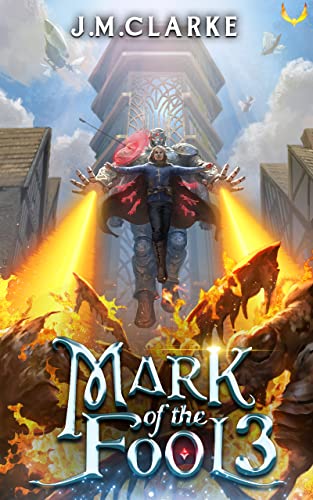
One of my favourite things about the Mark of the Fool series was that the main character, Alex Roth, ignored the call to adventure when he was chosen as one of the Five Heroes and instead ran off to magic school. It was entertaining and the way he worked around the restrictions of his choosing was great to see.
But the thing about a call to adventure is that, accept it or reject it, you’re still reacting to it. And by the end of the last book he’d decided to accept it, though on his own terms. So I was expecting this book to be about the expedition back to Thameland.
But expeditions take time to arrange, especially when there’s a demon summoner running about causing chaos, and so the preparations for the expedition instead mostly happen in the background while Alex and his Cabal focus on their summer term.
It’s not quite what I expected and I would have liked them to head straight back to Thameland, so it felt like this was more of a waiting period or filler arc than anything else. But there were new lessons and a Magic Olympics in it so it’s not like nothing’s going on.
In a way it did feel like a summer’s holiday. There’s a lot going on and you’re having a lot of fun but in the back of your mind you know that the end of the holiday is coming and you’re going to get back to work. And as much as I enjoyed this book, and I did, I can’t wait for the next one.
-
Makanuele Rumble by Travis M. Riddle (2023)

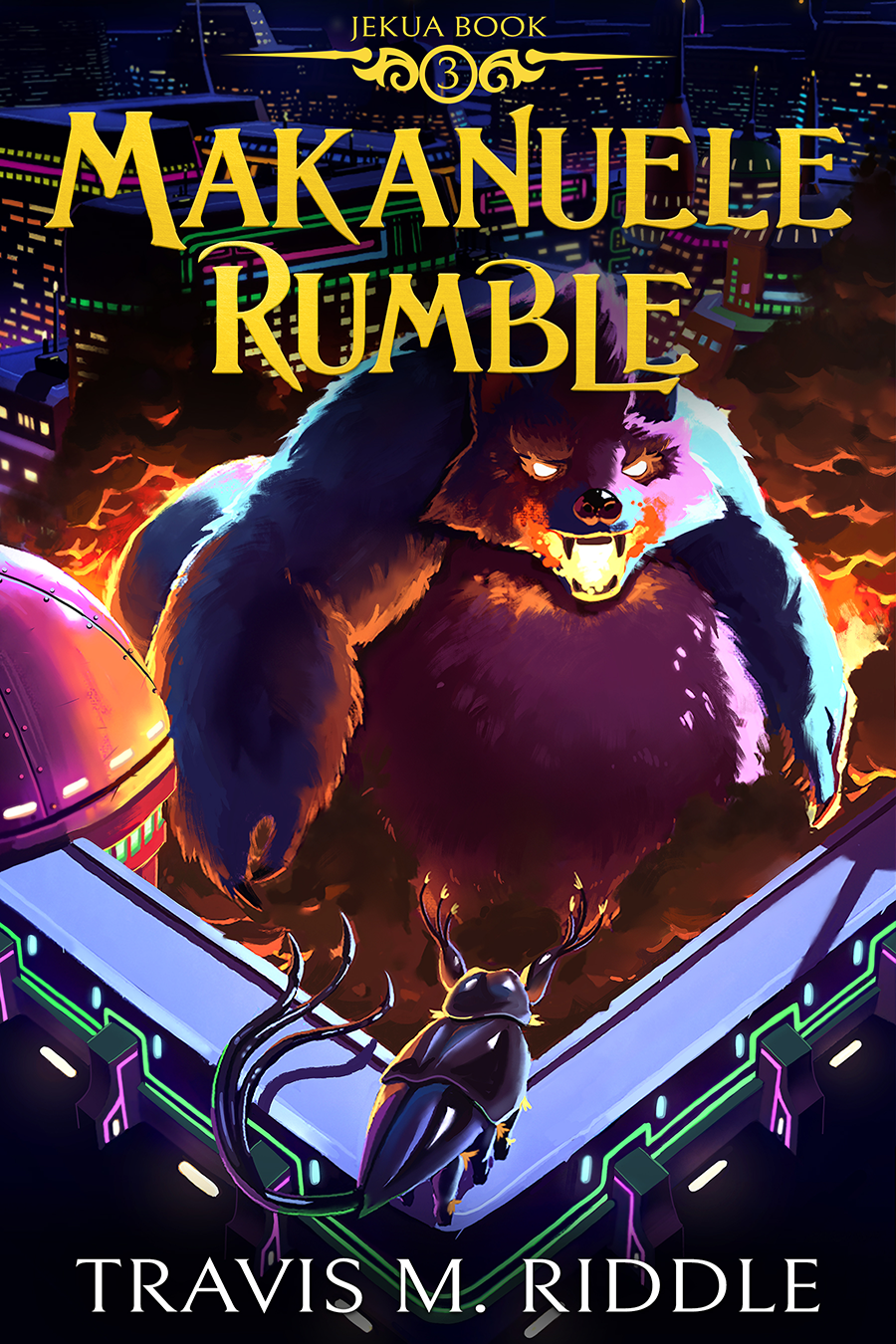
We’re back with the third book in the Jekua series, my favourite homage to Pokémon. When we last left our heroes Niona had joined the group and the friendship between Alani and Balt was strained after he abandoned her to go Jekua gazing and she got hurt. Which was a great development as far as I was concerned. In my previous reviews I talked about how the first book felt like a homage to the Pokemon franchise and it was in the second one where it started taking on a real personality of it’s own. If that’s the case then this is the book where the plot really takes off and it all begins with the ending to ‘A Fracture in the Qwisdeep.’
So we start this book with the violence of the Facet and Balt’s unavailability to protect Alani hovering over them. There’s also the no longer distant spectre of the Makanuele Rumble hoovering over them, the whole reason that Balt joined in the pilgrimage in the first place and which he’s now sworn he won’t take part in. It’s a good set up and the rest of the book develops it nicely.
Everything I liked about the previous books are still here. The world is fresh and interesting, the Jekua are introduced and described at a nice pace and the Pokémon references are still included in a restrained way. But what really shines here is the development of the characters. While we saw a bit of this in the last book, in this one they spend most of the time in one location and so there’s a lot more focus on it and less on exploring the world.
The tension that was introduced at the end of the last book is dealt with really well and I liked that progression all the characters made because of that. More I liked the way they developed as their own people. Balt and Alani were given more time apart and to breath in this book and they are the better for it. There’s a lot of really sweet moments, both between them and with other people.
And finally the ending pulled everything together is a really fantastic way. By the time I finished I felt that everything up until now had just been set up. Well written and enjoyable set up but a more focused plot starts now.
Once again Riddle took everything I loved about the previous book and dialled it up a bit, improving what needed to be improved and adding just a bit more complexity. If that’s a trend that’s going to hold I can’t wait to see what the next book will look like.
-
Mother of Learning 1 by Domagoj Kurmaić (2021)

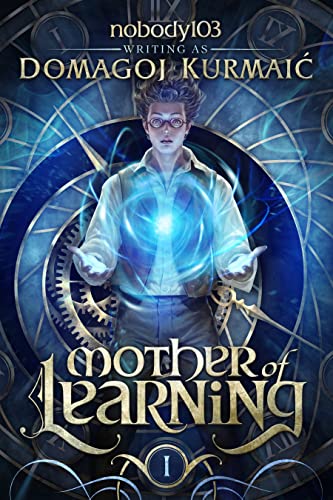
I’ve got a special fascinating with time loop stories. Like most people I was probably first exposed to it in Groundhog Day but since then it’s been something I sought out. It’s always interesting to see what twists each person put in the story, be they in book form, films or video games.
So take it from an appreciator of the genre that this is a great time loop story.
Zorian Kazinski is a normal student, though a very capable one. And yet he keeps falling behind Zach in his classes. Zach, who was bottom of the class until he suddenly became a genius in everything. Why this is is a mystery, and an annoying one, to everyone. Until there’s an assault on the magic academy a month into term and Zorian and Zach’s souls somehow get connected. Then Zorian discovers that Zach has actually been living through a time loop of the last month and that’s why he knows everything. And now Zorian is stuck there too.
There’s a few things that make this story stand out from the rest. To begin with, usually the protagonist is stuck in a relatively small loop, a day or so. This time loop lasts about a month, from the day that Zorian leaves to go to magic university to when the campus and attached city get invaded. This allows for a lot of variation between each of the cycles and is a nice exploration of how small changes can have ripple effects. The second is that most stories in the genre have the protagonist go through this alone, while here Zorian has Zach, whether he wants him or not. And the answer is not, with Zorian trying his best to stop Zach from realising that he’s looping as well. And finally because usually the time loop is seen as a curse, something to escape from. But for Zorian, he’s at magic university. So he takes this as an opportunity to learn.
This all adds up to a fascinating situation which was a great joy to explore. Watching Zorian discover news power or information about the people and places around him was great to see and fun to read. I’ve really got to give the author props for the way they release the information about the world. It’s nice and gradual and I was delighted that new facets of the world were being explored over 60% of the way through. This is a deep and complex world that has been build here and it’s being introduced and developed in a nicely paced and organic way. If there’s one complain I have it’s that I had a hard time placing some events, like wars, in the timeline of the world. There were things I thought happened decades before and it turned out to have only been a couple of years.
I was also a little worried about how the book would end. I knew that there was a sequel but in a book locked in a time loop it’s hard to bring things to a conclusion or a change. Well I’m not going to spoil it but let me just say that the ending was fantastic and washed all my concerns away.
In short, Mother of Learning: Arc 1 works well as a fantasy adventure and works even better as a time loop story. With an in-depth world and nicely evolving characters it is an engaging read and a fascinating mystery.
-
Beware of Chicken 2 by Causalfarmer (2023)


I very much enjoyed the first Beware of Chicken book. While it started as a usual isekai of someone’s soul getting trapped in someone else’s body (there was room, that person had just died), it turned into an amusing parody/send up of the genre. Jin Rou didn’t want to be part of the struggle and greed of being a cultivator, striving to reach the heavens at the expense of smashing everything else down. Instead he arguably went in the opposite direction. He started up a farm, put down roots, got married and made a family.
A big family as well. Because as a possible side effect of his chi-based farming approach various members of his farm started awakening their powers and becoming Cultivators. These included his wife, her sort of adopted brothers and various farm animals, including the titular chicken, two pigs, a cat, a rat and a fish. And in a lot of ways it’s these characters that the second book is about.
I’ll be honest, I’m very happy at the change in focus. Watching Jin Rou build a farm, slowly come to the realisation that various members of his farm were Cultivators (he got the message when they presented him with the scattered swords of the bandits that were going to attack him) and slowly woo his wife, while just ambling about unaware that he was actually pretty powerful and solving problems he wasn’t even aware of was fun but it was also a plot that was done. Beware of Chicken 1 could have been a standalone novel and it didn’t really cry out for a sequel, though it did leave itself open for one. Jin is a simple man who purposefully moved himself as far from the call to adventure as possible. Now that he’s settled he’s not really main character material.
What he is though is an excellent base and one that the second novel builds nicely upon. Because while he doesn’t particularly want to be a cultivator, his ‘disciples’ do. They have been handed both power and the ability to use it and seeing what they decide to do with said power is what makes this second book fascinating.
The Bi De, the chicken, who has tried in the past to follow the ‘traditional’ cultivator path of consuming pills and hoarding his power and found the limits of it pretty quickly is now looking to follow his own interests and find out what is beyond the boundaries of Fa Ram. In fact journeys are the main theme running through this book. Do you go out into the wider world or do you stay at home? Both are valid answers, as the book shows, it just depends upon the individual. And some travel to the Fa Ram instead. Xiulan, who stumbled upon the farm by mistake in the last book, has come back to learn. And in some ways to heal, as she’s affected by what happened during the hunt for Sun Ken.
I’d also like to highlight some fantastic ‘show don’t tell’ writing here. Both she and Tigu have regular spars, though they also both have their own demons that they’re contending with. In their first match there’s this wonderful passage: ‘In one exchange, a leaf fell between them, floating between slashing claws and spinning swords. It touched the ground unmolested, not even the air disturbed along its passing.’ In a later one though a similar exchange is described like this: ‘Two forms blurred through the night, cutting across the forest like dervishes. A foot hit the ground hard enough to leave a mark. Claws dug into bark hard enough to scar. A leaf floated through the air, where it was split in two from an errant strike.’ This is such a cool way to show how their worsening mental states. Really top notch writing.
Which sums this whole book up nicely, really. Yes, it’s a parody and a bit of a joke. But it is written superbly, plotted well and all in all was just a joy to read. So come for the jokes and stay for the interesting and well-crafted story.
-
The Last Echo of the Lord of Bells by John Bierce (2023)


This was easily one of my most anticipated books of 2023. I love the Mage Errant series for lots of different reasons, primarily it’s fantastic world building and it’s surprisingly deep approach to magic. And this is the finale! In the run up to this getting released I poured through all the other books, highlighting bits there were interesting or I thought would be relevant and bothering friends and family with my theories as to what would happen.
And now that I’ve finished it I just want to say, I called it!
Well some of it. Some of my guesses were right and some of them were completely wrong. And I loved all of it.
One of my complaints about Tongue Eater was that it was mostly just build up for this. Judging by what was written in the author’s notes, originally they were both planned to be just one novel but seeing as Tongue Eater was 577 pages long and this is 816 I can see why it was split into two. But all that’s fine because this is 816 pages of almost pure payoff.
I just charged through this book, to the surprise of no one that knows me. I didn’t mean to, I honestly meant to pace myself but I got about a third of the way in and just couldn’t stop. When you read it you’ll completely understand.
And then the next day was spent rereading parts of it, enjoying my favourite moments again and again. Honestly, even writing this review is taking longer than it should because I just keep going back to it.
So what makes it so good?
Well one it’s just written very well. I’m a sucker for big dramatic moments and this is full of them. But I’m also a sucker for sweet, emotional moments and it’s got a lot of those as well. This is, as said, the last book in this series and as such a lot of lingering questions in relationships and just in general are resolved one way or another. And, though I haven’t talked about it much in my previous reviews, the relationships in this book are lovely to see. A lot of people are very understanding and supportive of each other and it is, as I said, very sweet.
The series is also good at going off on odd angles that you didn’t see coming and yet were set up books ago and man were those good to read. There’s the usual assortment of odd and fun Great Powers showing up here, in as great a variety as you’d expect. And the action between them is a lot of joyous and nonstop. The pace of this book was amazing and I just flew through it, despite the 800 odd pages.
And finally, it’s just a good ending in general. Things are revealed and concluded and it definitely felt like an ending. But it leaves the door open for more and it’s a more that I want to see.
In summery, this book gave me everything I was desperate for. This is a great way of wrapping up the series, and has left me very confident that whatever we’re going to see next will be spectacular.

