-
Tower Climber 3 by Jakob Tanner (2021)


The most anime of book series is back! And this one is a tournament arc! Who doesn’t like a tournament arc?
Seriously though, this is a fun continuation to the series. The plot gets moved on, we see a lot more of the world and we get a nice look at some of the other races that humanity shares the tower with. I’ve actually got to give props to the author here. There’s not a lot of space to flesh out the different cultures and one or two of them are very forgettable. But the majority of them do get developed pretty well.
And yes, somehow it manages to get even more anime than the previous books. Now, as well as the aforementioned tournament arc, we’ve also got more character flashbacks and a pervy old teacher character. You can put that into your personal calculations as to whether that’s something you want to read but it’s there.
There was a few bits that I didn’t particularly like. For example, the character called The Toddler freaked me out but I’m really sure he was meant to. They were small bits of a greater whole though.
And I still like Max, despite him being stupidly overpowered and getting more so as the series goes on. He’s just kind of a likeable protagonist, not too full of himself but confident in his abilities. It’s a fine line to walk and yet somehow it’s pulled off.
If you liked the previous two books you’ll like this one as well. It’s a fun read and worth your time.
-
Deepwater Dungeon by Ryan Rimmel and Boe Hagen (2022)

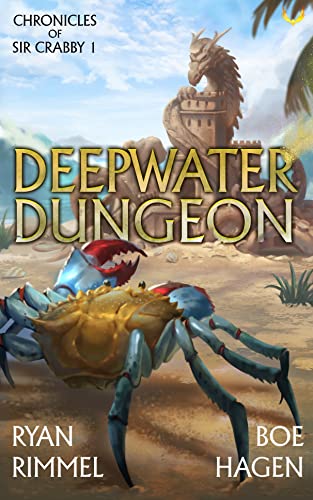
I entered into this book already predisposed to like it. Noobtown by Ryan Rimmel is one of my favourite LitRPG series and I was looking forward to seeing what he could do with a fresh series.
And I wasn’t disappointed.
Deepwater Dungeon sets us up with an unlikely hero. Sir Crabby McCrabbington, first of his name, is a crab. Just a normal crab, until a series of utterly unlikely events occur that causes him to gain sentience, classes and levels. After a brief period of the universe trying to come to grips with this, he finds himself in a dungeon, with the only way out to level and grow.
If you’ve read Ryan Rimmel’s work before you know what to expect. It’s a fun book, with a lot of jokes and lighthearted humour, an interesting look at the standard LitRPG formula and decent action scenes. Sir Crabby is a likeable protagonist and the world is interesting, with more depth than you’d expect for a jokey novel. It was a lot of fun to read and I managed to get through it really quickly.
I do have some complaints though. To begin with, the story takes a little while to get going. The first fifth of the book is mostly just justifying why we’re paying attention to this one crab. And the references, though mostly subtle and fun, do go overboard occasionally. For example I don’t know why we had an extended reference to Die Hard 3, a reference moreover that didn’t actually change it much but basically just ripped out a few scenes wholesale. And there’s some spectators to the whole thing who, apart from one or two bits, didn’t really add anything except vague commentary.
Those aside I really enjoyed this book. There were some really gripping and horrifying moments and I can’t remember the last time I felt so hurt on behalf of a LitRPG protagonist. The next book is set up with an interesting premise and I’m really looking forward to reading it.
-
Tower Climber 2 by Jakob Tanner (2021)


Just like Tower Climber, the sequel is anime as all get out. After surviving the coup attempt at the Exam Tournament, Max and Casey are fully fledged Tower Climbers. Now they just have to start their climb, while dealing with gangs, bureaucracy, and a missing princess.
I thought this book was a lot more focused than the last one and that’s not a bad thing. While I did like tower climber it definitely felt oddly episodic in parts. Things just kind of kept cropping up and happening and, while it all came together at the end of the book, I personally like books where the protagonists are aiming for a definitive goal. Which was what we got here. Max had to get to the 10th floor of the tower and everything that happened to him was in pursuit of that goal.
Usually I hate books with Main Character Syndrome, where the main character is super powerful and everyone is in awe of him, but this one strikes a rare balance where it actually doesn’t bother me. Sure, Max is way too powerful and is usually able to fight or think his way through everything. But the world doesn’t treat him that way. In fact most people going up against him underestimate him, only to get their asses kicked, usually with a last thought of ‘Who is this guy?’ It also helps that it’s not just him being overpowered. Casey also gets really powerful quite quickly and busts out some interesting techniques and abilities. Finally I guess it helps that he is always shown to be training and planning on ways he can be better. He puts in the effort, usually in quite entertaining ways, and all that together does seem to make all the difference.
The world isn’t that deep but it does have enough changes of scenery to keep it interesting. The plot is likewise a little basic but it’s well done and enjoyable. The powers of everyone are getting a little ridiculous and, as I’ve said, very anime but in a very enjoyable way. All in all this book was a great follow up to the first.
-
How to Defeat a Demon King in Ten Easy Steps by Andrew Rowe (2020)


This book is a love letter to the Legend of Zelda franchise. Set in a world that’s practically identical to Hyrule every so often a Demon King rises to power and one hundred years later a Hero will appear to defeat it. However this time the Demon King is making really ambitious strides in conquering the world and there might not be much left to save. So into the picture steps Yui Shaw, ready to beat the Demon King the way she knows best. Manipulating and breaking the system.
It truly is a lot of fun to read. You don’t need to be super familiar with the Legend of Zelda games to enjoy it. I haven’t played any of them and I still loved it. The plot bounces along at a nice, quick pace with multiple levels being gained at a time. The tone is naturally humorous and the characters engaging enough. Watching the way they approached dungeons and enemies was very satisfying as someone who’s yelled at his fair share of block puzzles.
It’s also nice and short, only 151 pages on my kindle. While I didn’t feel that it was getting stale sometimes parodies can go that way so it’s nice that it didn’t have any fluff and kept it concise.
All in all this book is fantastic for anyone who likes LitRPG or the Legend of Zelda.
-
Bloody Spade by Brittany M. Willows (2021)

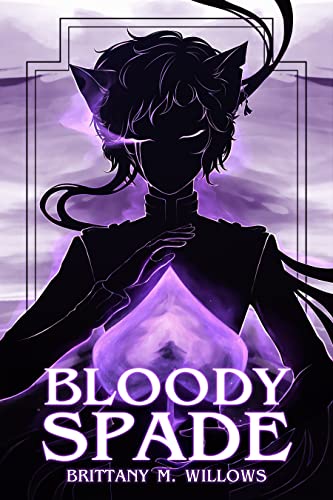
This is one of the most anime books I’ve ever read and I mean that as a complement. One of the main characters is a catboy, there’s a bunch of magical girl (and boy) transformations and they fight against the forces of The Void. It’s great.
However what separates this book from the other overly anime books that I‘ve read is that it’s played entirely straight. The others tend to be more ‘surface anime,’ where they’ll play into all the tropes almost like they’re counting them off a list. But Bloody Spade, like the best of all anime, plays it completely straight. Sure, there’s catboys and magical transformations and all that but they fit into the lore of the world. Ten years ago magic returned to the world, in this one city in particular, changing people and giving them magical abilities. The authorities reacted with suspicion and basically quarantined the city, not allowing anyone with magic out. Some of the magic users turn to crime, some just want to live normal lives and some become heroes. It’s a great and interesting setting.
If there’s one complaint that I have however is that we don’t get to see enough of the lore and the wider world. The wider world is very understandable, as everyone’s trapped in the one city. And there’s enough references to it to satisfy me that it’s out there and built up enough. But the history of the world is something that really needs to be expanded on. One of the main plot points of the book centres around Suites, four special magic people that have appeared in ancient times and of whom, so far, only one has appeared. There’s references to old poems and stories about them and how they have to use this fragmented knowledge of the past to try and work out what’s going on in the present. Which is a great plot device but my problem is that we don’t get to see enough of those pieces of knowledge to know what’s going on ourselves. There’s obviously a nice background to this world and what’s happening in it but I don’t think the reader gets to see enough of it. At one point a being called a Star turns up and I think that was the first time they were mentioned in the whole book. It’s a small quibble but it nagged at me a bit.
That aside this was a very readable book. There’s always something going on, the author’s voice is strong and entertaining and the characters develop well. Also it’s lovely to see the range of representation in this book. There’s lesbians, gays, bisexuals, pansexuals, trans people, non-binary and not one, not two but three people under the asexuality umbrella. That last one was particularly nice to see, as the ace community has enough problems getting people to agree that the A in LGBTQA doesn’t refer to Allies, let alone have main characters in the media.
All in all I loved this book and all I can say is that I want more. More of the world, more of the history, more of the characters and more of the story. Can’t wait for the sequel.
-
A Darkness at the Door by Intisar Khanani (2022)


I’m fairly sure this is the last book in the Dauntless Path trilogy but I will absolutely not be upset if there is another, though it would focus on someone else. Once again this is a fantastically written fairy tale, skilfully weaving the darkness that tends to come up in the genre with light moments of good humour. Picking up a few days after the end of The Theft of Sunlight, we find Rae stuck in the hold of a slave ship. I don’t want to spoil what happens next but man, this book does not mess around. Selecting story threads and plot points that’s been woven through the previous two books and introducing them in a natural but exciting way, every reveal was fantastic. My only complaint is that once again some prior adventure with a dragon was referenced and I can’t seem to find it anywhere. It’s not important to the story, per say, but it would really complete my experience if I could read it.
But that aside this story was such fun to read. The characters are well realised, even if a bit stuck in their own heads on some occasion (well at least one character…). It’s adventurous and shows even more of this interesting world. As a story it took me on a journey and I loved every moment of it. I highly recommend it to anyone interested in fairy tales or just really good, well developed characters.
And if someone could let me know where I could find the story about the dragon that would be fantastic.
-
Mark of the Fool by J.M. Clarke (2022)

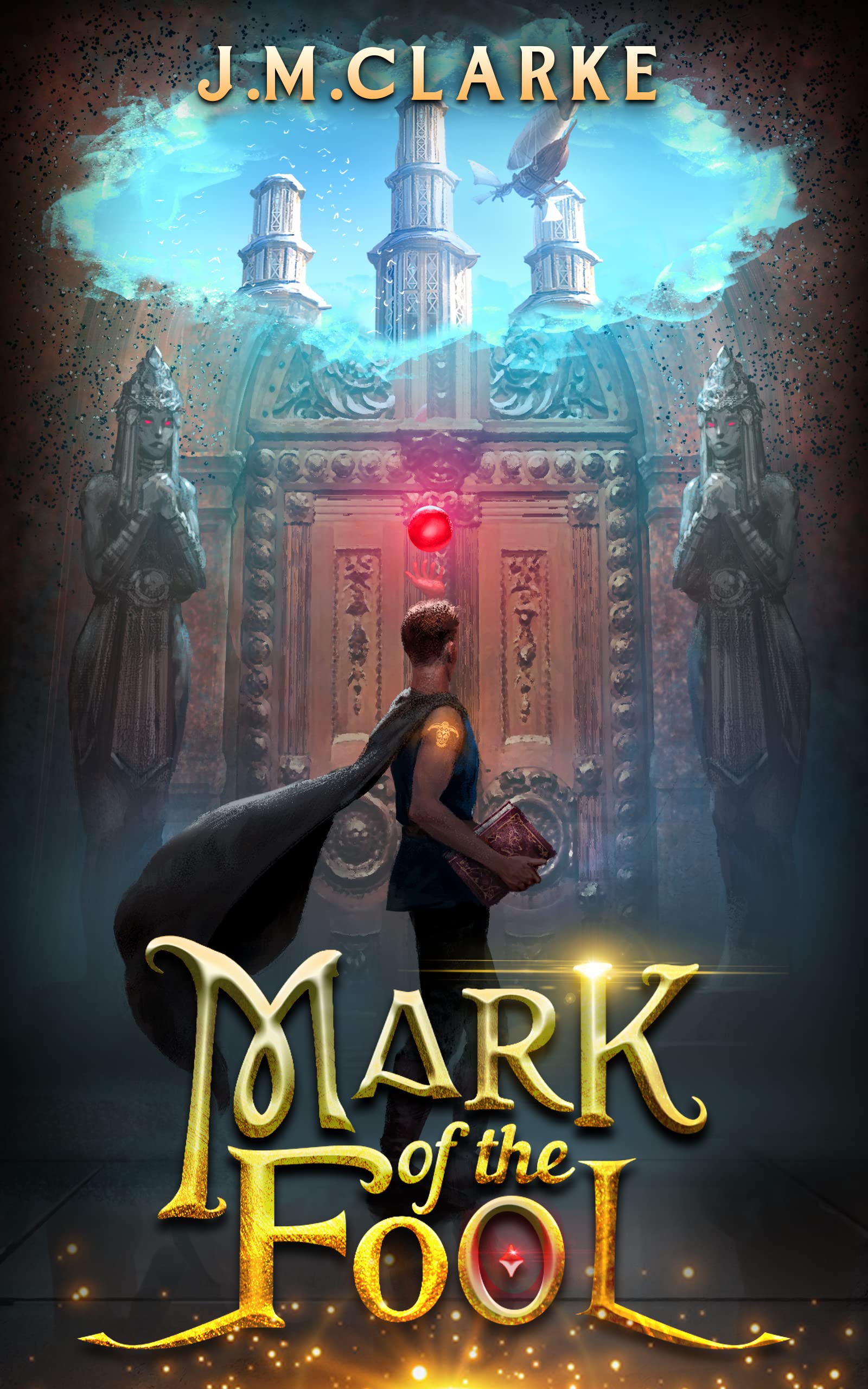
Firstly I just love the set up of this book. Alex Roth lost his parents at a young age to a house fire and has been slaving away in a bakery ever since. But on the day of his 18th birthday, just as he’s about to go to Magic University he gets branded with the Mark of the Fool. The Ravener has returned and he is one of the heroes chosen to fight it.
To which he replies, “Nope,” grabs his little sister, his best friend and her dog and hairs off in the opposite direction. Great start.
This book is a masterclass in restraint. The Mark that he’s been given, commonly thought of as the least of the Marks, is still stupidly overpowered. It basically means that he can learn almost all skills at a hugely accelerated rate, though it does knacker his ability to learn combat, magic and divinity. However, by focusing on magic it never feels as broken as it should. Alex has always wanted to be a wizard and he’s not going to let being magically crippled stand in his way. It’s a nice slow build, in both his skills and the revelation of the world.
And the world itself is fun as well. It’s described with a fair amount of depth and I loved the perspective it took on the Ravener’s awakening, that for all it seemed such an immediate problem when in the country, the rest of the world takes it much less seriously. It gives a lovely context to everything.
Honestly, this is the sort of book I love to read. There’s action and adventure, sure, but also people trying to work out how to break systems and use their abilities to the best possible advantage. And a deep world full of lore. I can’t wait for the next one.
-
Tower Climber by Jakob Tanner (2020)

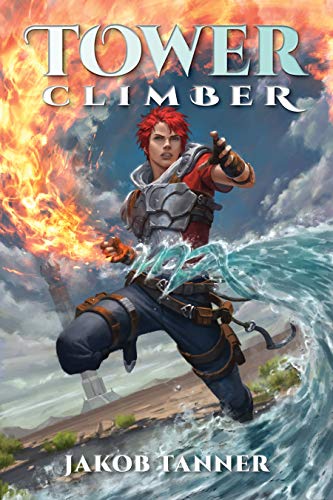
This is one of the most anime books I’ve ever read. The main protagonist, Max, has an overpowered ability, spiky red hair and the determination to see him to the top. His mentor is called Sakura of the Golden Blade, his teacher also has spiky hair, a dishevelled outfit and constantly smokes a cigarette. There’s a girl whose thing is origami and constantly has a gerbil called Toto. They even did the bit where she lands on top of him and calls him a pervert. There’s flashbacks in the middle of action scenes. The book makes a good start at hitting all the tropes in anime and I believe, with four more books stretching ahead of it, that it can go the distance.
I love it.
Honestly it reminds me a lot of why I started to getting into anime and my thoughts at the time. This book, like all good anime, is like the characters are having philosophical discussions by punching each other. Max needs to escape the orphanage and climb the mysterious tower to find his sister. The gerbil girl wants people to take her seriously and respect her, despite her legacy. The bad guys are up to evil schemes because of their convictions (that they should rule). It all flows together naturally and none of the plot points ever feel forced.
This is not a great work of fiction or anything but it is fun. The characters aren’t particularly deep and are a bit tropey but it’s strung together in a very entertaining fashion. At this point I’ve read it three times and I never regretted it. And, if anything I’ve written sounds like something you’d be interested in, I recommend you read it too.
-
The Theft of Sunlight by Intisar Khanani (2021)

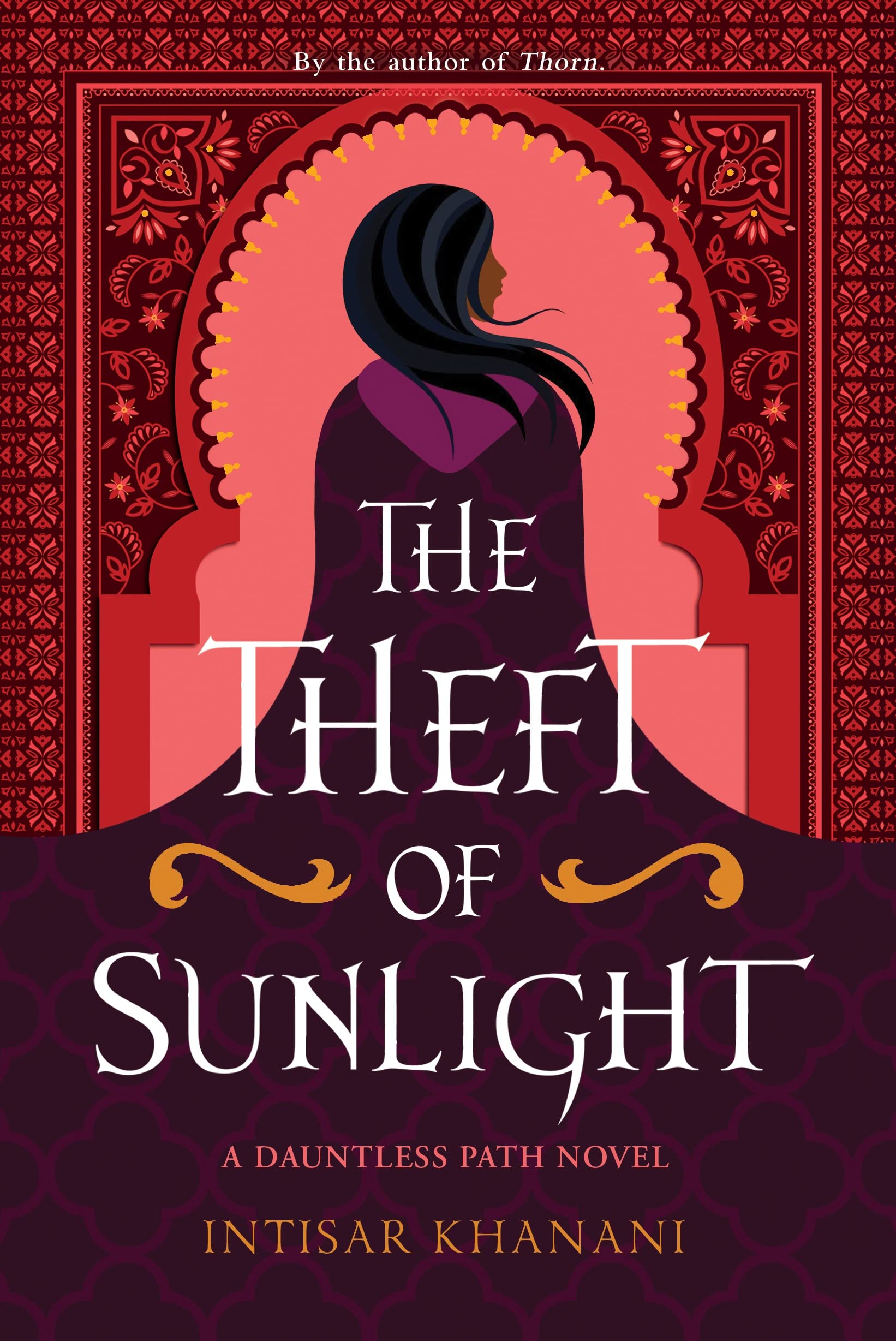
First the few criticisms I have, because once I get started on the good I won’t be able to stop. While this follows on from a stand alone book it really behoves you to do prior reading. Not just Thorn, which is to be expected, but also the short story The Bone Knife. The main character, Rae, and her family are introduced in this, along with her disability. While the exact way in which she is disabled isn’t exactly of the upmost importance and is explained in the book, she begins a relationship with another character in it as well and it’s referred back to several times. There’s also a reference to her and her sisters meeting a dragon, though I don’t know where that’s from. In short, do the reading and seek out Thorn and The Bone Knife before you start this. Thankfully the Kindle edition of Thorn bundles both of these together.
That aside, I loved this book.
There was a lot of good things to say about Thorn but it was a story very centred around the protagonist, Thorn. It had a rich world with several interesting things going on it in but Thorn mostly dipped her toe into them and left me with a lot of questions. This is the book where those questions are addressed, if not answered.
Spurred by the kidnapping of one of her friend’s sisters, Rae accept an invitation to court with the aim of doing something about the Snatchers, who disappear kids and enslave them. She quickly finds herself engulfed by the shadowy politics of court and the grimy underlife of the city. Having equal experience with both, none, she has to find her balance and investigate where she can, despite the risk to herself.
Thorn was a very dark and depressing book, with a lot of terrible things happening to and around the protagonist. The Theft of Sunlight also has that but it’s not as personally aimed at Rae, which makes a nice difference. And maybe what I like most is the life going on in the background. Alyrra and Kestrin getting married is a lovely occasion, which takes up most of the novel. The different ceremonies and events lends a lighter tone to the more serious plot of slavery. I particularly like the part where Kestrin turns up with gifts and is ritually chased out only to return with more.
The whole story is a rich tapestry of light and dark, rich and poor, kindness and cruelty. Like all good fairy tales. It’s enchanting.
-
Soul Relic by Samuel Hinton (2022)

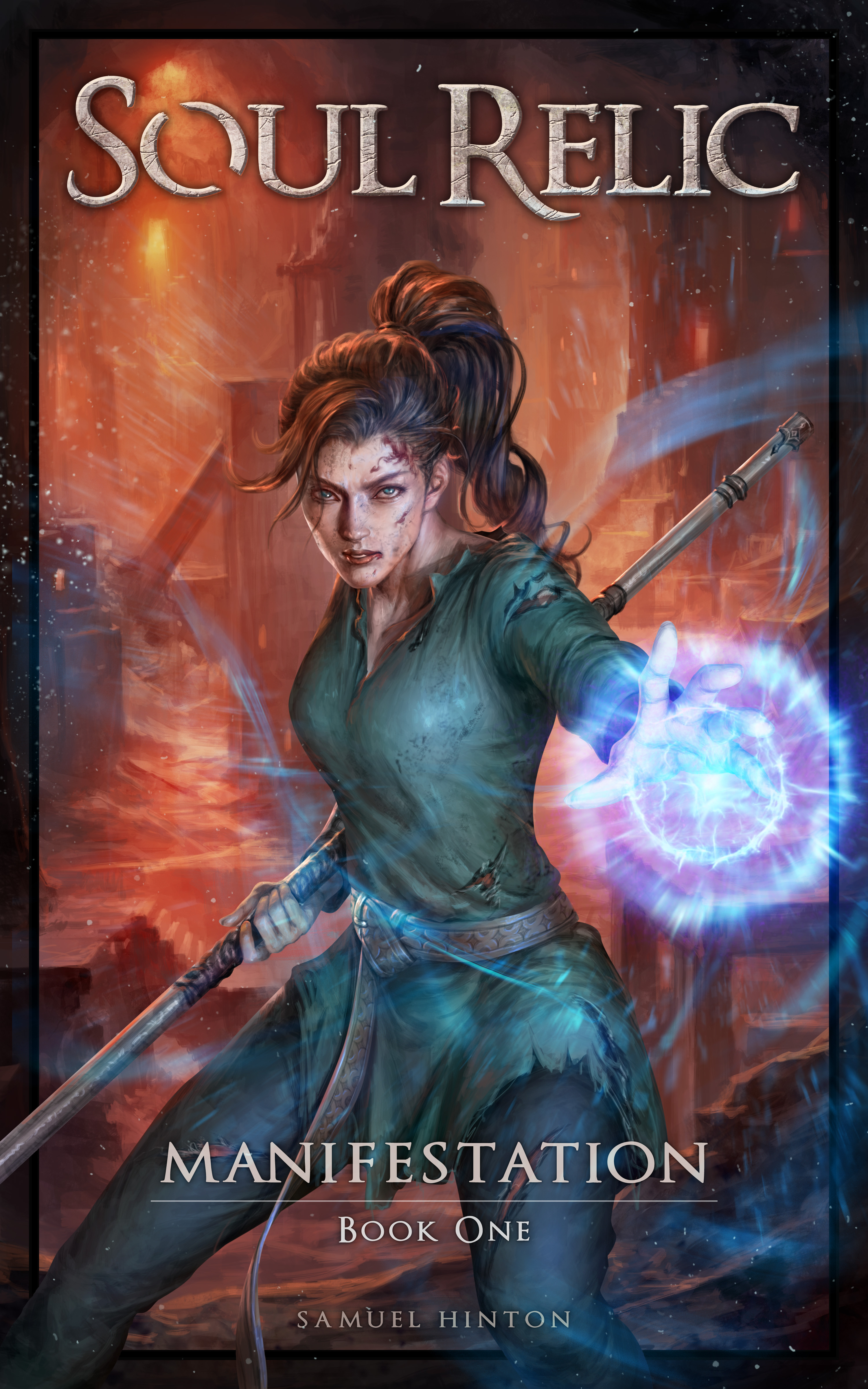
Soul Relic starts off strong with a nice dose of deicide. It’s a very dramatic beginning and sets us up well for the rest of the story. That’s just a side plot though. The actual story focuses on Raysha, a normal girl who cannot properly use magic. For, though most people can absorb aeon through their skin to properly fuel their spells, she can only get it from eating aeon rich fruit. It’s a nice handicap for the character to work around and try to overcome and the story that leads from it is interesting and varied.
The magic system itself is flexible and engaging. The practitioner makes runes inside them that each have different meanings, like, say, light. They can then either project those runes outwards, which in this case would cause them to shoot out a beam of light, or integrate it with their body, which would cause their body to glow. Most people just set some runes then forget about it but obviously Raysha isn’t able to do this, as she doesn’t have the aeon to spend on it. So she’s forced to come up with each rune again and again on the fly.
The world is nicely realised and described. I always like deep worldbuilding and this felt like a real, living place. This was a road story so we get to see a fair amount of it but the writer managed the trick of leaving you feeling like you hadn’t seen everything, that there was always something more over the horizon. This is paired nicely with the characters, who are well realised and nicely diverse. They had a good depth to them and, even though the book is done, I know there’s a lot about them that I don’t know. It’s also just written really well. I flew through this book and really enjoyed the turns of phrase, both from the characters and by the writer.
All this adds up to a great first book in what promises to be a great series. I’m looking forward to the next book and can’t wait to read it.

