-
Beware of Chicken by Casualfarmer (2022)


Man, I really loved this book. Sometimes you just want to sit back and read a nice, chill entertaining book and this was one of those times.
Waking up in the previously dead body of Jin Rou partway through the fight that killed him, our protagonist takes his name and decides that the brief introduction into the life of a Cultivator (getting beat up) is enough for him. He quits the sect that his body was previously part of and goes in search of a quiet life. A farmer’s life.
This is perhaps my only complaint about the novel. You never really learn about who the main character was before he became Jin Rou. He’s got all the body’s previous memories and you get the occasional mention of him being Canadian or living on a farm but that’s it. We don’t even know what his name was in the Before, as it’s called, or if anything happened to him to make him end up body switched.
That aside the rest of the novel is a fantastic send up on the Cultivation genre. It cleverly lampoons the often single minded desire that the characters have to gain power above all else. While Jin Rou is happy just setting up his farm and forming ties in the community his farm animals are gaining sentience and regarding him as their Sect Master. And kind of taking matters into their own hands while he continues on unknowingly.
The writing is light and funny and the plot just bounces along. And every so often there some beautiful artwork, detailing what happening. I sent my friends the one with the chicken fighting the fox in dramatic manga fashion.
As it is a parody you should probably read other Cultivation novels before you read this, just so you know what it’s parodying. If you’re already into the genre then absolutely read this book. It’s so much fun. I really hope there’s a sequel.
-
Kairos: The Last Gods by Maxime J Durand (2022)


An interesting take on both Greek mythology and the LitRPG genre
In a lot of LitRPG book the levelling system is sort of a crutch. There’s a lot of focus on levelling, on what talents to pick and everything is kind of directed through that. The same cannot be said for Kairos: The Last Gods. In fact for a lot of the book you could be forgiven for forgetting that the levelling system was there at all. There’s no keeping track of experience points or working out how much you can get. Every so often, once the main characters have performed some impressive feat, a message will pop up saying that they’ve got a level. A character saving up skill points so they could unlock a specific class is the most indepth we get with it.
Well that and the legends, which leads us into the unique and interesting take on Greek Mythology.
This is set in a world where humanity rose up and overthrew the Greek Pantheon. In doing so they gained access to the LitRPG System that gave them their powers. The world also flooded as a result of their actions, leaving humanity based on a bunch of islands that used to be mountains. Everyone can level themselves up to a certain point but to go beyond they have to gain a legend. I’m not sure if they can be gained by just doing mighty deeds or if you have to kill a previous holder of a legend. It was suggested the latter, but the former seems to be more the case.
It’s a really interesting setting and the writer takes full advantage of it. There’s a nice change of opinion through the book about the overthrow of the Gods as the main character reflects on it. A lot of inspiration has been taken from shows like Rome so there’s plotting, alliances, and politics aplenty. There’s just also monsters and magic. And it definitely feels like a living world, with things happening independent of Kairos, the titular main character.
Speaking of Kairos, as a character he is fine. Mostly what you’d expect from a LitRPG hero, he charges at challenges and seeks to build both his own personal legend and his country. The side characters are much more interesting. There’s a nice spattering of those who remember the old world and those born into the new, each with their own unique view on things. I especially liked the character arc of Cassandra, the first mate.
I believe this is a web serial, though I haven’t read anything outside of this book. As such it’s definitely building to something bigger on the horizon. But I found it very well paced. Yes, it’s fairly long at 704 or so pages but it has a definite arc and it ends at a nice point. I’m looking forward to reading the next book but I don’t feel like I’ve been left on an unfortunate cliff-hanger, which is occasionally the case with web serial adaptations.
All in all Kairos was a fun read and I’m looking forward to reading more.
-
Discount Armageddon by Seanan McGuire (2012)

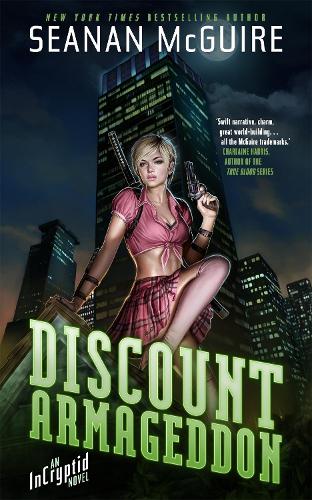
This was not the first Seanan McGuire book that I’d read. I had previously tried her October Daye series but hadn’t really clicked with it (I would later go back, read a few more books and enjoy it.) But that meant that I didn’t come into this with the best of opinions.
I was completely wrong. This might be one of the strongest starts to a long running series I’ve ever read.
It’s such a great idea as well. While a lot of Urban Fantasy protagonists are Private Detectives, here Verity Price follows a different kind of investigation. For she is a Cryptozoologist and she’s in New York to investigate the local Cryptid population. Well, that and try out for dance competitions.
It’s a fun rollercoaster of a book. You meet lots of cool creatures, nicely developed characters and there’s plenty of good action scenes. It’s also well formatted, which might seem an odd thing to mention. But every chapter has a little quote by a member of Verity’s family at the beginning of it, which really adds to the overall tone of the book. It’s very well crafted.
Interestingly enough it also holds together surprisingly well on the reread. I went back after reading the ten other books in the series and found myself enjoying it just as much. There is a lot of character development in the series and it was fun rereading it with that different perspective in mind.
I had a great time reading this book and I had equally as good a time rereading it. It’s a strong start for a strong series and I can’t recommend it enough.
-
Street Cultivation 2 by Sarah Lin (2020)

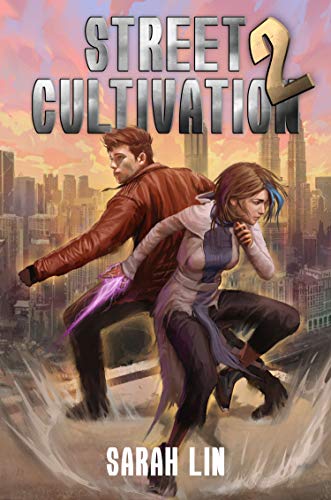
Street Cultivation 2 is fascinating to me because it takes normal cultivation and turns it on it’s head.
Let me explain. So usually in Cultivation novels the goal is inner improvement, followed intrinsically by outer improvement. You channel your chi, you rank up, you face challenges to improve yourself. That’s the basic plot. There’s complications and people try and stop the characters from achieving this, in various ways and for numerous reasons, but the core point is that by improving yourself you can face any challenge that life throws at you.
Street Cultivation 2 takes a different approach. While Rick, the main character, does work on and improve himself it’s mostly in pursuit of a specific goal. Whereas in the first book there was the Underground Tournament and the fight with Mike to motivate him, now there’s the much more murky idea of how to improve himself and get a better job and place in society. As this is Cultivation by way of Capitalism the power you gain can be temporary. Invest it badly or in the wrong way and it could be useless or all slip away.
The characters continue to be their interesting and engaging selves. There’s some big developments and revelations. I particularly like how Rick reacts to them. He doesn’t back down from a challenge but when the world goes ‘Here’s a Quest’ he doesn’t let his main character status take over. He thinks about whether it’s a good thing for him to do and what effect it’ll have on him.
Honestly the most fitting thing I can say about this book is that it’s a very real and grounded novel. It picks up nicely from where the last one left off, the writing is humorous and well-paced and I had a lovely time reading it.
-
This Class is Bonkers! By J. P. Valentine (2021)


The second book continues in much the same way that the first did. It’s a nice, low stakes journey around the kingdom, seeing sights and fighting monsters. There’s new characters introduced, each pretty interesting, and the characters continue to level up.
If I had one complaint it’s that there’s a lot of hanging around in this one. The group gets out of the situation it was in at the end of the previous book arguably too easily. And after that there’s less missions and dungeon delving than in the previous book and a lot of them are fairly anticlimactic. Apart from that there’s generally just a lot of hanging around. Which I liked, it was nice to let the characters breath and develop. But it also doesn’t really give me much to write a review about.
All in all if you liked the first book you’ll like this one. Nothing big or dramatic happens but it’s a good, humorous time.
-
This Quest is Bullshit by J. P. Valentine (2021)


A lot of LitRPGs take themselves way too seriously. This is not one of those books. Set in a type 2 LitRPG world (the system has just always been there and it’s how things are) our main character is a Messenger Girl called Evelia Greene who has been given the life quest to ‘Head to the next town over and pick up a loaf of bread.” Only this quest is given a Legendary Difficulty. Thus do our adventures begin.
This book is a lot of fun to read. The plot bounces along at a jolly pace, not stopping for too long at any one point. The characters in this world seem to gain levels and abilities pretty quickly so there’s always something new to see, something different being added into the mix. It’s not the most mechanically focused LitRPG I’ve ever read with people taking ages pouring over their lists of abilities and there’s no stats that have to be assigned, which is to its benefit.
The world is nice and quirky, with interesting things to see yet no complicated systems of governance to get bogged down in. Politics is not a big thing in this book, just adventurers getting their job done. All in all I had a lot of fun reading this. The sequel to this book is This Class is Bonkers.
-
Street Cultivation by Sarah Lin (2019)


Street Cultivation is a fantastic and fun read. Focusing on Rick, a young but poor martial artist, it has everything you know and love in a Cultivation novel. There’s tournaments, self-betterment and mystical arts to master. But this is an urban telling of the story so the tournaments are underground and the mystical arts can be found at your local library. The characters are nicely realised and the plot bounces along at a steady pace. More than most it really emphasises the struggle of becoming more powerful, both through having to work on yourself and how being poor can be a hard position to get out of. Because in this world those are the same thing.
As an interesting twist on the genre this is Cultivation by way of Capitalism. You do generate a small amount of Lucrim to invest in yourself but the main way of gaining it is by working jobs and being paid it. You then invest it in your ‘portfolio’ of different abilities, some of which will start giving you small returns of Lucrim. Or you could spend Lucrim on other things, things that you might need to make it through the week. It’s a fascinating take and something I haven’t seen done elsewhere.
As good as this book is, however, I would recommend avoiding it for now if you haven’t read a Cultivation novel before. This was my first experience with the genre and I was pretty lost with how it all worked. Going back after reading other books like Will Wright’s Cradle series and Sarah Lin’s other series, The Weirkey Chronicles, I found it much easier to understand what was happening with the magic system.
If you’ve got some experience in the genre then I can say definitely check this out. It’s a lot of fun and a good read. The sequel to this book is Street Cultivation 2.
-
Raven Stratagem by Yoon Ha Lee (2017)


As the sequel to the amazing Ninefox Gambit I went into this novel with high expectations that were mostly met. I read this book with my book group so I’ve spent more time discussing the story and how it’s put together than I usually do. All in all we liked it but there were a few divisive issues.
The first oddity of this novel is that we don’t get the same Point of View as the first book. The main character, Jedao, is there but we don’t see events from his perspective. Arguably this was also the case in the first book but Cheris was a lot closer to him than the characters in Raven Stratagem. It’s always a problem with great tactician characters that they have to be a little mysterious but in this case it might have gone too far. Anyway, I personally thought it was really well done but one of my friends thought it was a bit of a bait and switch.
This is maybe exacerbated by the fact that in general we don’t spend as much time around him as in the first book. In that one we were in mostly the same location throughout. In this one we are jumping between a number of different characters in different locations. This lets the world develop and gives it more depth, while letting us know more about what’s going on. However, the action in the book falls off towards the second half. There’s a lot of plotting and manoeuvring from several different people in reaction to Jedao but as we don’t know what he’s plotting in any way, because he’s not telling anyone, it mostly boils down to people making probing strikes at him.
The characters are all good and interesting. The action we see is on par with what we got to enjoy in the first book. The world is fascinating. But the slow down towards the end kind of takes away from this. All in all I think that this book depends a lot on the third novel, which is a general weakness of second books. Either it’s set everything up amazingly or it’s wasted a hundred odd pages. I have the upmost faith that it’ll turn out to be the former and I can’t wait to read it.
-
On Lavender Tides by Travis M. Riddle (2022)


First and foremost this reads like a love letter to the Pokémon franchise. If you’ve played the games before then you’re going to recognise a lot here. From the different types of creatures, to the main characters starting in a small town, to a jackass rival, to a cave full of the local equivalent of zubats. There’s random hikers challenging the main character to battles, there’s gyms and there’s tournaments. This absolutely a book written by someone who loves Pokémon games.
What’s really interesting, however, is how it manages to steer around some complaints that people have with the main Pokémon franchise. The main one that Pokémon battles are basically glorified dog-fighting and that you’re just grabbing random animals and forcing them into a life of combat. However in On Lavender Tides trainers just get copies of the animals they want to fight with, using a type of magic called Soul Clay. The book also emphasises that care for the original creatures is important and that you should strive as much as possible not to hurt them. It’s a small change but really does do a lot to emphasise the connection to nature and animals that the original games suggested. There are still limitations so you can’t just copy every creature you see but it is explained well in the book, as well as what battling with these copies means and how you can change them.
The second improvement is that the world is much more detailed and realised. In the games everything is about Pokémon, raising, battling and training them. In the book, while they’re still a prominent part of the culture, battling is treated as just another sport. They even mention some other sports that are played in the arenas. This goes a long way to making the world seem more alive. And what a world it is. I found myself lost in it, enjoying every detail and planning on cooking some of the food mentioned. Everything fits together in a beautiful way and I loved the characters slowly wandering along so that I could take in the sights with them. All in all this is a fantastic start to the series. The sequel is A Fracture in the Qwisdeep.
-
Legends & Lattes by Travis Baldree (2022)

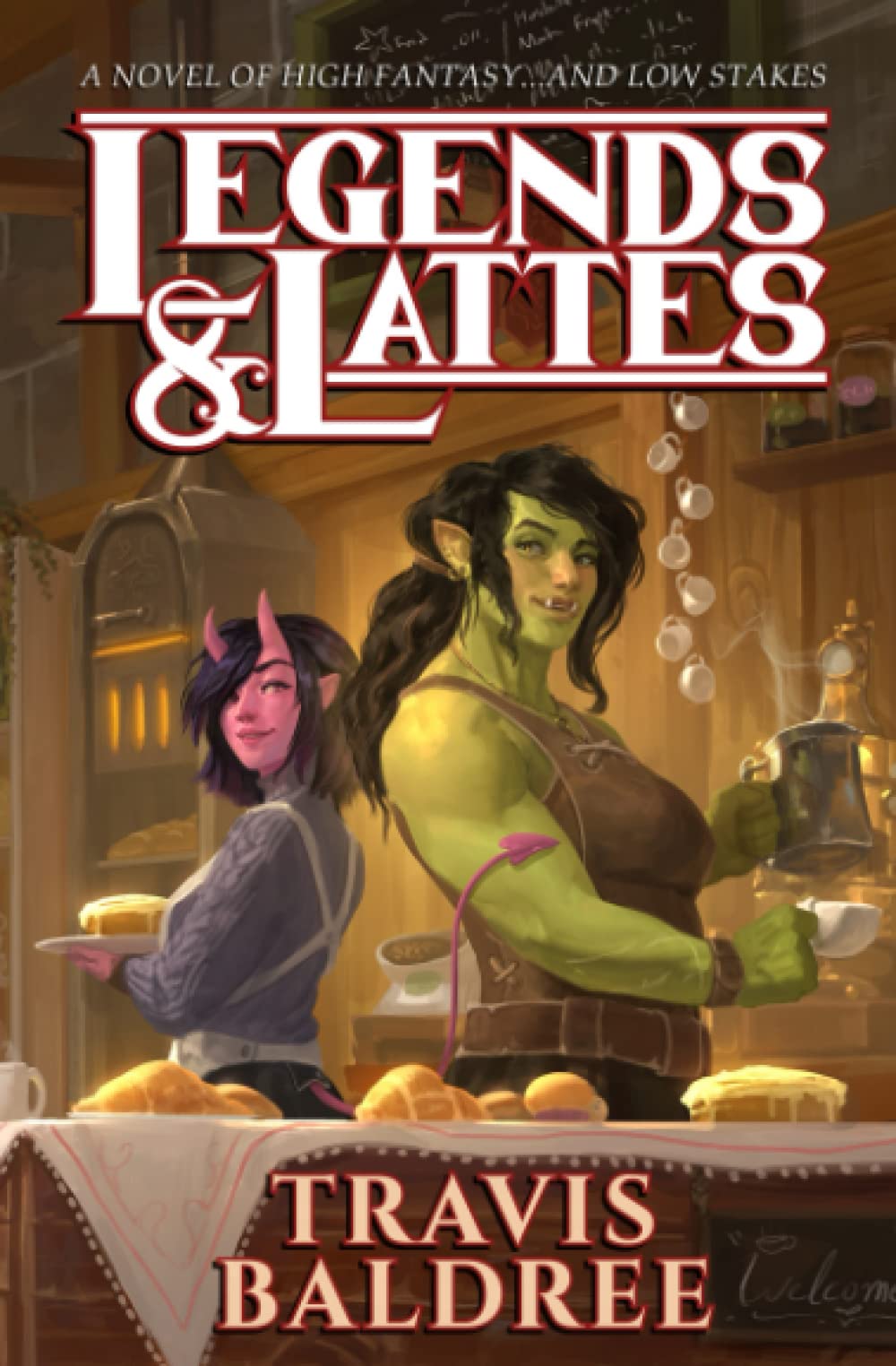
Sometimes you just want to relax with a lovely story about an orc ex-adventurer retiring and deciding to start up a coffee shop. And that’s exactly what I got with this.
I absolutely love stories about people building businesses or just existing in a fantasy world. In this one Viv, an orc adventurer, decides that she’s done with the life and retires to open a coffee shop. How can you not love this as a premise?
Viv uses her savings to buy property and materials and over the course of the book gathers a group of people to help her make her dreams a reality. She builds everything up, one piece at a time and it’s a lot of fun to watch and very satisfying.
But there’s a deeper story beneath it, about her truly giving up her old life. Every time a threat to her new life arises, be it from previous enemies or the local protection racket, there’s a temptation to pick up her sword and deal with it the way she used to. It’s a really nice display of whether she takes the possibly easier route that she has experience with or whether she’s fully committed to her new, more peaceful lifestyle. This is a message that I really love, that change takes commitment and effort but that if it’s something you really want to do then it’s worth it.
The characters are well written and it’s nice getting to know them. There’s no one that stands out as amazingly different to anything you’ve seen before but there doesn’t need to be. There’s also a nice, subtle slow burn romance, which is the best kind. All of this comes together to make a delightful read and I heartily recommend it to anyone who just wants to sink into a fantasy world for a few hours.
If you’d like to read more Sapphic Fantasy, try The Midnight Girls by Alicia Jasinska.

